
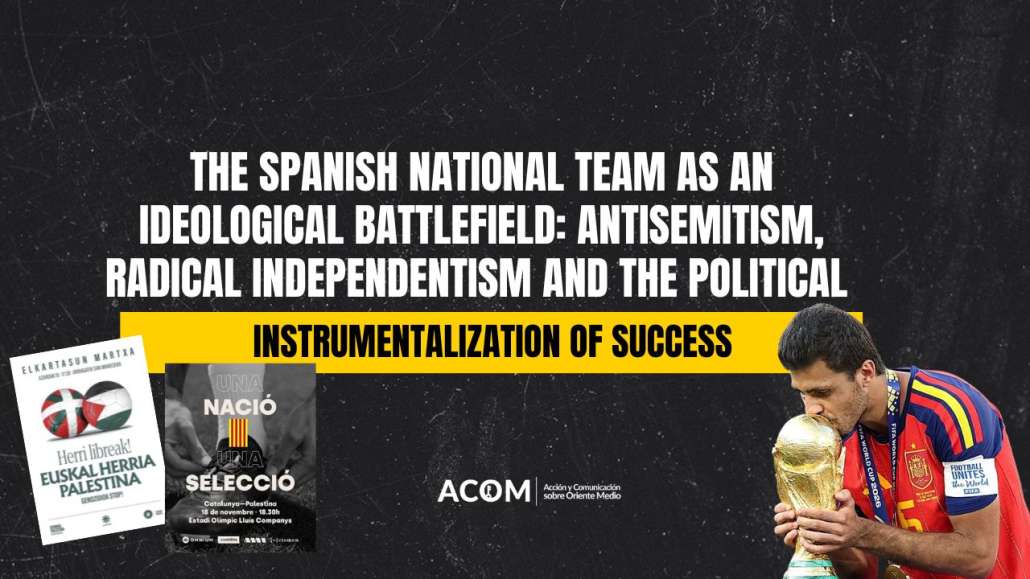
The Spanish national team as an ideological battlefield: antisemitism, radical independentism and the political instrumentalization of success
The victory of the Spanish national team in the 2026 Football World Cup has once again highlighted a long-standing political and ideological reality: those who have historically rejected the Spanish national team as a symbol of national unity are, systematically and simultaneously, the same actors who have fought against Israel and promoted antisemitism. This coincidence is neither casual nor conjunctural. It is part of a structured pattern that combines the rejection of constitutional Spain with militant anti-Israelism.
1. The historical association between the rejection of the Spanish national team and hatred of Israel
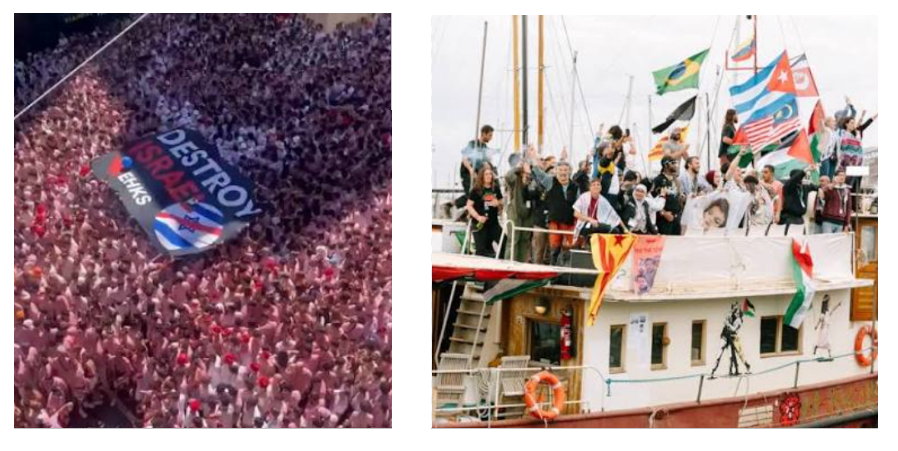
The environments of the kale borroka, the ideological heirs of ETA, the radical Basque and Catalan independentist groups that display ikurriñas and esteladas in confrontation contexts, have consistently been the same ones that deploy Palestinian flags, burn flags of Spain and Israel simultaneously and assault those who defend both symbols. This association has been repeated for decades in demonstrations, kale borroka acts and independentist mobilizations.
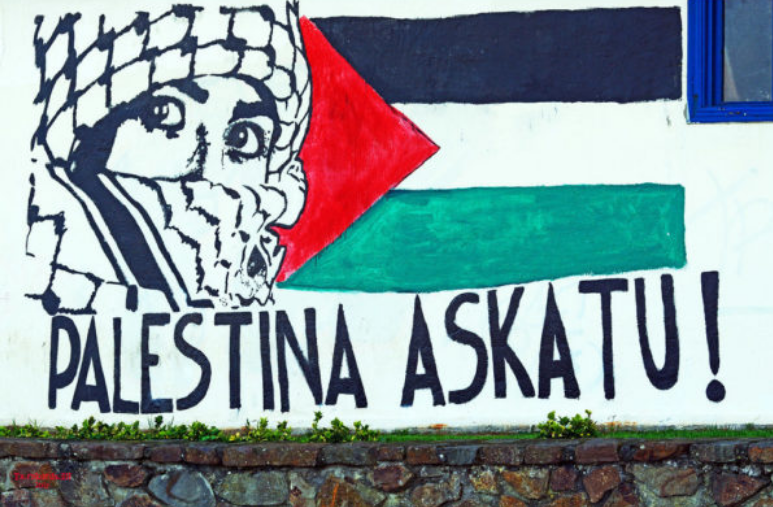
Today, those same environments continue to be two of the main foci of anti-Israelism in Europe, with a documented presence in the pro-Hamas flotillas and with elements linked to Hezbollah. During the celebrations of the 2026 World Cup, the only serious incidents of verbal and physical aggression against Spanish fans were precisely carried out by Basque and Catalan separatist radicals
2. The radical left and the conflictive relationship with the Spanish national team
Formations such as Podemos and Sumar, government partners of Pedro Sánchez, have for years maintained a relationship of rejection or interested politicization towards the Spanish national team jersey, considered an excessively powerful symbol of national unity. This attitude has extended even to major sporting successes, as occurred with the Women’s World Cup.
A recent and significant example is the request by Sumar Galicia that the Spanish national team withdraw from the 2026 World Cup due to the “imperialist drift” of the United States.
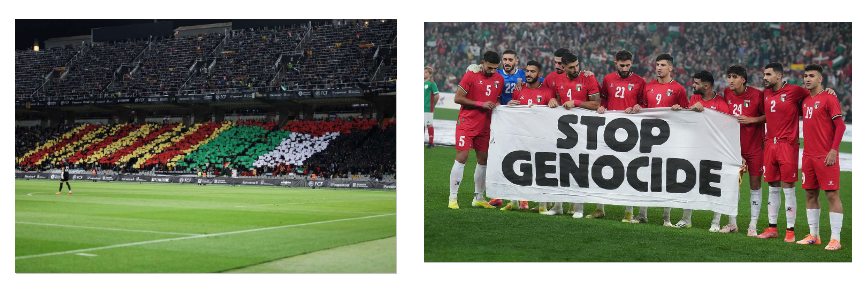
In parallel, the abertzale world, from left to right, and Catalan independentism have actively promoted campaigns in favour of the “national teams” of Euskadi and Catalonia, in open opposition to the Spanish national team. The abertzale left called mobilizations for the official status of the Basque team precisely before the Spain-France match of the World Cup. EH Bildu organized concentrations against the national teams of Spain and France. After the Spanish victory, Gabriel Rufián took the opportunity to demand the official status of the Basque and Catalan teams. The same teams, curiously, that organized matches a few months ago with the Palestinian team, becoming both encounters genuine antisemitic gatherings.
This same left that has rejected or relativized the Spanish national team is the one that now tries to appropriate its success, while simultaneously wishing for its defeat or celebrating the victory of Argentina . And also the environment of the abertzale right: the PNV, the conservative Basque nationalist formation, prohibited the retransmission in municipal squares of the football final, or has refused to receive the Basque world hampion players , as has been done in the rest of the country.
3. The case of Lamine Yamal versus the behaviour of the rest of the squad
During the open-top bus parade celebrating FC Barcelona’s League title in May 2026, Lamine Yamal waved a Palestinian flag from the convertible bus, in a context in which esteladas (catalan separatist flag) were also displayed. Yamal, of Moroccan origin (with a controversial history behind him, with him himself celebrating Spain’s defeat against Morocco), constitutes the exception.
The rest of the players of the Spanish national team waved with naturalness and pride their patriotic feeling, the flag of Spain and those of their respective autonomous communities.
These players, mostly of moderate sensibilities, are now attacked by the left because they do not follow to the letter the ideological discourse marked by Pedro Sánchez (with evident lack of enthusiasm on the part of the players).

4. The reality of the streets versus the governmental narrative
Pedro Sánchez is a deeply unpopular president. His presence in stadiums and in the run-up to the World Cup final repeatedly generated the chant “Pedro Sánchez, hijo de puta”.
In contrast, the popular celebrations — with nearly two million people in Madrid alone — were characterized by an overwhelming presence of Spanish flags and by the absence of Palestinian flags. The only relevant incidents were carried out by separatist radicals, who even physically assaulted Spanish supporters.
And in that maelstrom of Spaniards proudly celebrating the success of the national team, a regrettable incident, one, in which young people of Maghrebi origin threw an Israeli flag to the ground.
Attempting to present a few isolated individuals who defile the Israeli flag as representative of the majority sentiment of the Spanish people constitutes a deliberate manipulation.
And in that maelstrom of Spaniards proudly celebrating the success of the national team, there was a regrettable incident in which young people of Maghrebi origin threw an Israeli flag to the ground. Attempting to present a few isolated individuals who defile the Israeli flag as representative of the majority sentiment of the Spanish people constitutes a deliberate manipulation.
5. The strategic risk of generalization
The radically anti-Israeli positioning of the current Government does not reflect the majority sentiment of Spanish society. It is an ideological agenda and a smokescreen.
Within a foreseeable timeframe Spain may have a Government more favourable to Israel. If by then an artificial social animosity towards the Jewish State has been constructed by attributing to the Spanish people as a whole the decisions of an Executive that does not represent the majority on this issue, a strategic error of serious consequences will have been committed. Attacking the country instead of the Government that leads it is, simply, unintelligent.
6. Distinguishing Sánchez’s government from the country: the historical trap and the lessons from Latin America
The French expelled the Jews on multiple occasions (up to seven according to some historical counts). The English did so more definitively in 1290, with the Edict of Expulsion of Edward I. The current street situation in France and the United Kingdom is much more complicated than in Spain, where Islamic migration, unlike those countries, is not majority.
One must act intelligently and not with the gut. Distancing oneself from feeding narratives that do not help. Talking about the Inquisition and the expulsion of the Jews 500 years ago, identifying it with the Spanish people of today, is crazy: it takes us back to hatred of Spain, not hatred of this government. It generates precisely the breeding ground that Sánchez tries to create: confronting Spain with Israel and, at the same time, the Jewish world with Spain.
What is convenient is that our allies in this country — who are many — do not identify Jews and Israel with a problem with Spain, but exclusively with Sánchez.
Neither in Israel, nor in the Jewish community in the diaspora, has anyone with two ounces of common sense identified Sheinbaum with Mexico, Petro with Colombia, Lula with Brazil, Boric with Chile, nor even the Kirchners with Argentina. No one spoke of Argentina, Colombia, Brazil or Chile: they spoke of their government.
If Israel had dedicated itself to attacking Colombia 150 million times instead of Petro, how would Israel have rebuilt relations afterwards with the Tiger? How will it do so when Sánchez falls? Attacking the country instead of the government that leads it is a strategic error of serious consequences.
7. The international parallel: Netherlands, Morocco,… New York
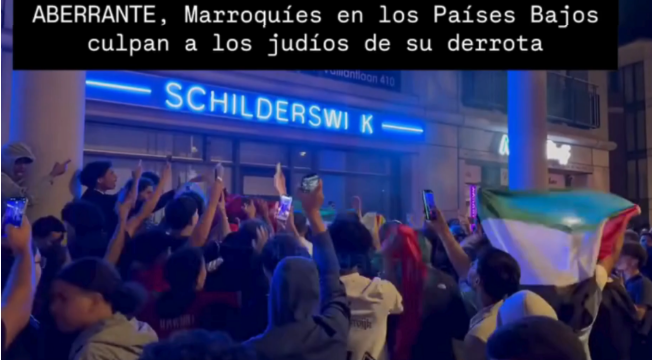
After Morocco’s elimination in the World Cup, groups of Moroccans in the Netherlands gathered chanting openly antisemitic slogans: “All Jews are faggots! Hamas! Hamas! All Jews to the gas chambers!”. No one with intellectual rigor would claim that “the Netherlands has fallen” nor would make a generalization about the Moroccan government, which has had more friendly positions towards Israel than those demonstrated here by its subjects.
Following that “cherry picking” strategy, are all New Yorkers antisemites because their mayor is or because there are crazies attacking Jews there?
That generalization eliminates the responsibility of the true destabilizing agents: radical Islamism and its alliance with sectors of the extreme left.
8. The appropriation of someone else’s success
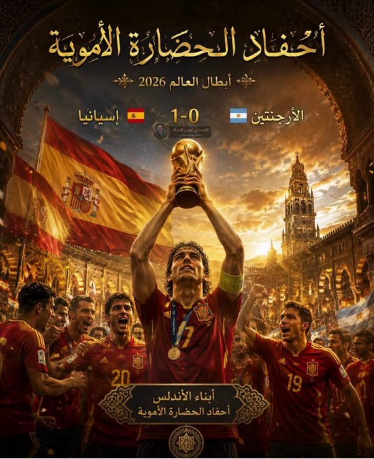
Certain discourses have presented the Spanish victory as a triumph of the «heirs of the Andalusian Caliphate». Spain is not that nor does it intend to be. However, that is the mental framework that is imposed outside our borders, especially in the Arab world, in the Palestinian sphere, in Hamas and in the Islamic regime of Iran itself. And, by “coincidence”, also within Spain: in the minority sectors of the radical left and of separatism.
Unfortunately, some pro-Israeli positions fall into the trap of assuming that manipulation as true. There seem to be enormous desires to appear as especially attacked and harassed, when the reality is not like that. The permanent victimization and the search for the example taken out of context to demonstrate a supposed generalized hostility against Israel in the Spanish population constitute the dream of the enemies of Israel.
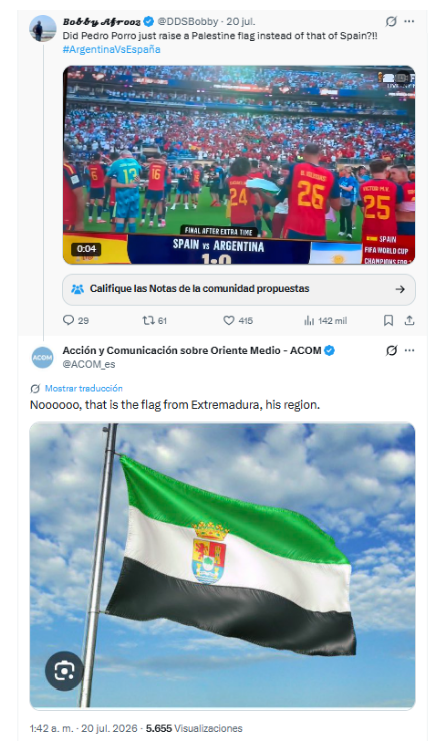
In this World Cup another paradigmatic example has occurred. To the already indicated one of Maghrebi fans throwing the Israeli flag to the ground is added the massive hoax spread by pro-Palestinian accounts from the very moment the Spanish players received the World Cup and celebrated it with regional flags on the field. Pedro Porro displayed that of his autonomous community, Extremadura. Unfortunately, that crude manipulation was fed from pro-Israeli positions that embraced it uncritically and without any rigor.
It is not necessary to add a non-existent hostility in spaces beyond any suspicion, as in the case of Porro, which antisemitic activism does not hesitate to manipulate in a crude manner.
The only documented attempt to appropriate the victory by waving a Palestinian flag during the celebrations ended with Spanish fans throwing that flag to the ground and rejecting the politicization of a success that belongs to them.
The Spanish national team represents a history of success, unity and pride shared by the vast majority of Spaniards. Turning it into an ideological battlefield is the objective of those who have spent decades fighting both constitutional Spain and Israel. And a lack of strategic vision in the short, medium and long term.




Leave a Reply
Want to join the discussion?Feel free to contribute!